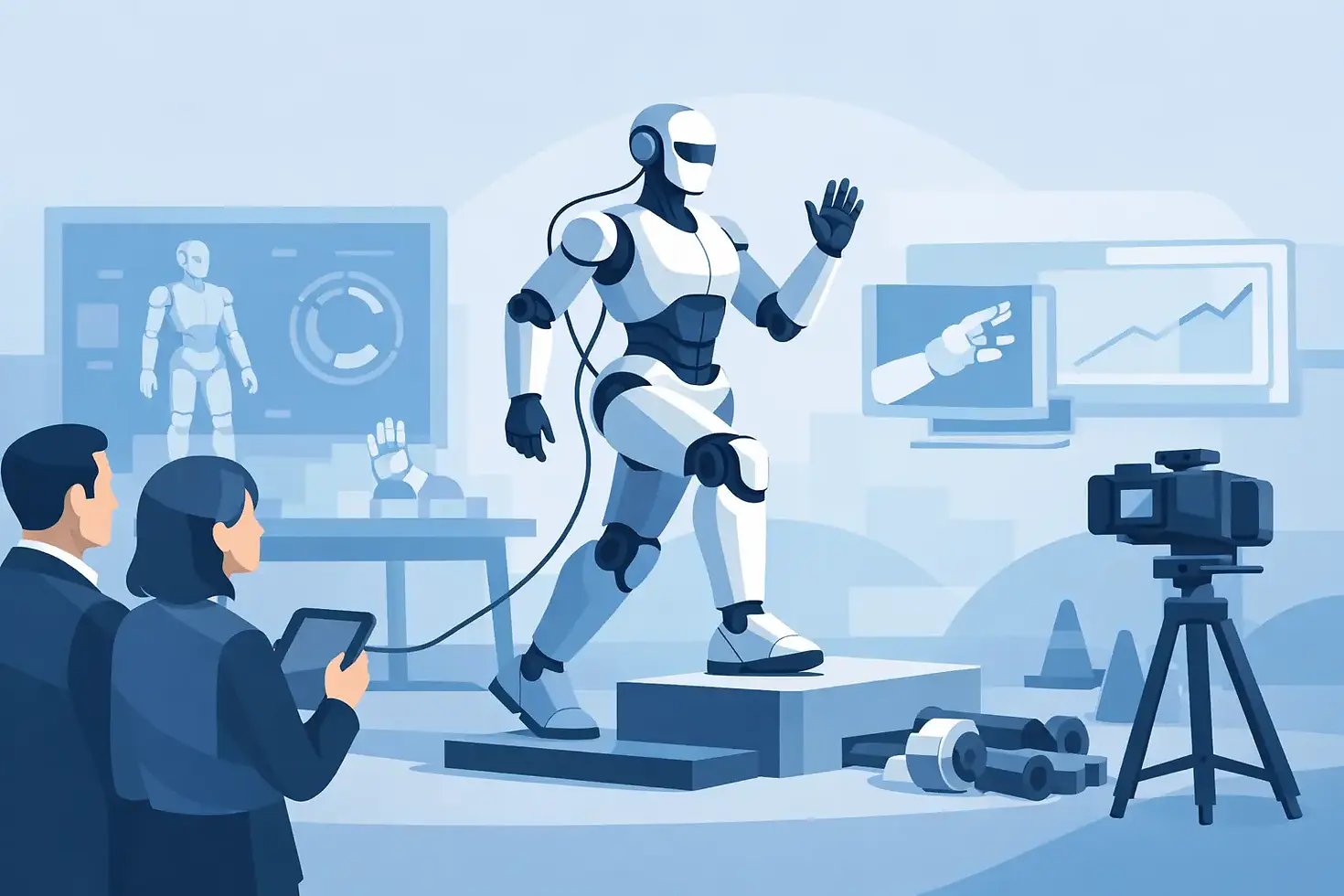
Humanoid Robot Demos: What Real Progress Looks Like

A humanoid catches a tossed object, walks through a factory, folds a shirt, or chats with a person - and suddenly the future feels close enough to touch. That is the power of humanoid robot demos. They turn years of engineering into a few unforgettable seconds. But for anyone following the global robot race, the real question is not simply, "Was that impressive?" It is: what did that demo actually prove?
The answer separates a spectacular clip from a meaningful product signal. The best demonstrations reveal how a machine senses its environment, moves through uncertainty, handles objects, recovers from mistakes, and repeats useful work. That is where the next generation of smart machines becomes more than science fiction content. It becomes a category worth watching, testing, and eventually buying.
Why Humanoid Robot Demos Matter So Much
Humanoid robots are designed for a world built around humans. Our workplaces have stairs, doors, shelves, tools, carts, kitchens, warehouses, and control panels at human height. A robot with arms, hands, legs, cameras, and AI can potentially operate in those spaces without every building being rebuilt around it.
That promise is enormous. It is also why a 30-second demo can carry so much weight. A clean object pickup might suggest advances in vision, hand design, force control, planning, and training data. A stable walk over uneven ground can point to better balance algorithms, actuators, and whole-body control. A robot that understands spoken instructions hints at a future where interaction feels less like programming and more like collaboration.
Still, one great take is not the same as a reliable capability. A demo may be carefully staged, remotely supervised, sped up, edited, or performed in a highly controlled environment. None of that automatically makes it misleading. Robotics teams need controlled tests to show progress. The smart viewer simply knows to ask what conditions were required to make the result happen.
What to Look for in Humanoid Robot Demos
A demo is most valuable when it makes the hard parts visible. Watch the robot before, during, and after the headline moment. Does it locate the object by itself? Does it hesitate when the object shifts? Does it adjust its grip? Does it finish the task without a human stepping in?
Repeatability beats the perfect take
The most exciting phrase in robotics may be less glamorous than "first-ever." It is "repeated successfully." A humanoid that completes a task once under ideal conditions is a breakthrough candidate. A humanoid that completes it hundreds of times, across different lighting, object positions, and environments, is moving toward commercial value.
Look for demonstrations that show multiple attempts, longer uncut sequences, or performance metrics. Even a simple task like placing items into bins becomes meaningful when the robot handles variation: different shapes, changing orientations, cluttered surfaces, or a bin that is not exactly where it expected.
Recovery is where intelligence shows up
Real environments are messy. An object slips. A person walks past. A box is heavier than expected. A door does not open cleanly. The strongest robot demos do not hide every failure. They show what happens next.
Can the machine rebalance after a bump? Can it re-grasp an item after missing it? Can it stop safely when someone enters its path? Recovery behavior is a major signal because it reflects whether the system can cope with the gap between a lab setup and the unpredictable physical world.
Watch the hands, not only the walk
Human-like walking earns attention because it is visually dramatic. But hands may be the bigger commercial story. Warehouses, factories, retail spaces, and homes are full of tasks that require picking, placing, turning, sorting, carrying, and using tools.
A robot hand does not need to look exactly like a human hand to be useful. Sometimes a simpler gripper is faster, cheaper, and more reliable for a specific job. But when a humanoid can manipulate a wide range of items with careful force and precise positioning, its potential expands dramatically. Folding soft materials, loading delicate products, opening packaging, and using everyday tools are difficult demonstrations for a reason.
Autonomy changes the meaning of the clip
A robot can be controlled in several ways. It may follow a scripted sequence, rely on teleoperation from a human operator, use a mix of remote assistance and onboard autonomy, or perform the task independently with its own sensors and AI.
Each mode has value. Teleoperation can gather training data and enable useful work before full autonomy arrives. Scripted motion can validate hardware. But they should not be confused with a robot independently understanding a new task in a changing setting.
The best demos are clear about the level of autonomy. If that detail is missing, treat the performance as an exciting glimpse rather than a final verdict.
The Demo Formats That Tell the Bigger Story
Not every demo needs a robot doing backflips or serving coffee. In fact, the most commercially relevant footage can look almost ordinary. A humanoid moving containers from one shelf to another for an extended shift may tell us more about the market than a cinematic one-minute montage.
Factory and warehouse demonstrations are especially important because they offer defined workflows, measurable output, and real economic pressure. If a robot can work safely around people, operate for long periods, and reduce repetitive strain, companies have a reason to deploy it. That is why teams across the industry are targeting material handling, inspection, sorting, and basic assembly.
Home demos matter differently. They are a window into consumer robotics, but they face a tougher environment. Homes are filled with irregular layouts, pets, children, cables, fragile objects, and constant surprises. A humanoid that can load a dishwasher or organize a counter in a real home is attempting something much harder than performing the same task on a perfectly prepared set.
Social and conversational demos deserve attention too, particularly as AI companions become more capable. Natural voice interaction, expressive movement, gaze, and context awareness can make a robot feel less like a machine and more like a presence. Yet personality is not a substitute for utility. The category wins long-term when emotional appeal and practical function meet.
The Trade-Offs Behind the Wow Factor
Humanoid robotics is not a single race with one finish line. A robot optimized for speed may sacrifice battery life. A robot with highly articulated hands may be more capable but also more expensive and harder to maintain. A machine built for warehouses may not need expressive facial features. A consumer companion may prioritize safety, charm, and affordability over lifting capacity.
There is also the question of legs. Bipedal locomotion gives humanoids access to human spaces, but wheels can be more efficient on flat surfaces. For some commercial tasks, a wheeled robot with arms may be the practical winner. For stairs, uneven terrain, and environments designed entirely around people, legs become far more compelling.
That is why the best way to judge a demo is through its intended job. Ask whether the robot is solving a real problem better than existing automation, not whether it looks most human on camera.
From Viral Moment to Real Deployment
The path from a remarkable demo to a fleet of deployed robots is long. Hardware must survive daily use. Batteries need practical runtime and charging plans. Safety systems need to earn trust. Operators need tools to monitor machines, update tasks, and handle exceptions. The economics have to work, whether the robot is purchased outright, leased, or offered as a service.
This is where transparency becomes a competitive advantage. Teams that show real environments, sustained operation, failures, improvements, and clear task boundaries help the entire market mature. They give buyers, educators, creators, and robotics fans a more accurate picture of what is arriving now versus what is still on the horizon.
For enthusiasts, the opportunity is bigger than picking a favorite robot brand. Follow the details: task duration, payload, speed, autonomy, recovery, safety, and the environment around the machine. Those details reveal the difference between a promising prototype and a platform that could reshape work.
At We Are The Robots, that is the energy worth following: not just the clip that makes everyone stop scrolling, but the next demo that makes you think, "This machine could actually be here soon." Watch closely, stay curious, and imagine what these remarkable new teammates will do when the cameras keep rolling.


Comments