
Robotic Pet Therapy Makes Companionship Real

A soft robotic cat curls up on a resident’s lap. Its fur is warm, it purrs when stroked, and it asks for nothing in return. That small moment is the force behind robotic pet therapy: not a sci-fi novelty, but a new category of companion machine built to create comfort, prompt connection, and bring a little life into spaces where loneliness can be loud.
For a robotics audience, the technology is fascinating. For families, caregivers, and care organizations, the question is more immediate: can an artificial animal genuinely help a real person feel better? The answer is often yes, with an important qualifier. A robotic pet is not a replacement for human care, medical treatment, or a living animal. It is a responsive tool that can make difficult moments gentler.
What Robotic Pet Therapy Actually Does
Robotic pet therapy uses interactive animal-like devices to support emotional well-being and social engagement. These machines may purr, bark, move, react to touch, make eye contact, respond to sound, or use sensors to recognize when someone is holding or petting them. The best ones do not feel like a tablet with fur glued on top. They create a simple feedback loop: touch produces a response, the response encourages another touch, and the interaction feels personal.
That loop matters most in settings where a real animal is impractical. Senior living communities may face allergy concerns, infection-control rules, staffing limits, or resident safety issues. A person with dementia may enjoy the familiar rhythm of petting a cat but be unable to care for a live one. Someone recovering in a hospital may need a calming presence without the logistics of feeding, walking, cleaning, or veterinary care.
The goal is not to fool anyone. Many users know perfectly well that the animal is robotic and still value the experience. Adults do not stop enjoying music because they know it comes from speakers. In the same way, a responsive robotic companion can offer an emotionally meaningful interaction without pretending to be biology.
Why a Machine Can Create a Real Response
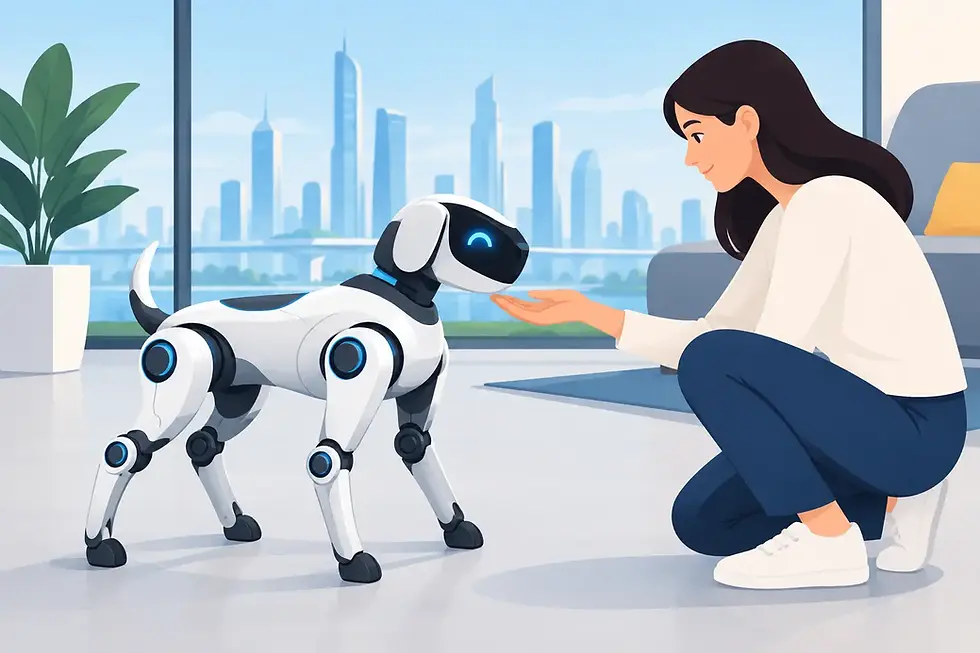
Humans are wired to react to faces, voices, movement, and touch. A robotic dog that lifts its head when called or a cat that purrs under a hand activates familiar social signals. The interaction is especially powerful when it gives the user agency. They are not simply watching a device. They are causing something to happen.
That sense of agency can be valuable for people whose days are heavily scheduled or dependent on others. Holding a companion animal, naming it, talking to it, or showing it to a visitor can restore a small but meaningful role: caregiver, friend, storyteller, host.
Robotic pets can also change the social temperature of a room. A quiet resident may begin talking about pets they owned decades ago. A family member who does not know how to start a conversation may have an easy opening. Care staff can use the animal as a bridge rather than forcing direct engagement. The robot becomes the shared third thing in the room.
There is a reason the strongest companion robots prioritize personality over raw technical spectacle. A dazzling quadruped that can perform athletic stunts is incredible engineering. But in a therapy setting, a gentle purr at the right time may be the more useful behavior.
The leading designs are intentionally simple
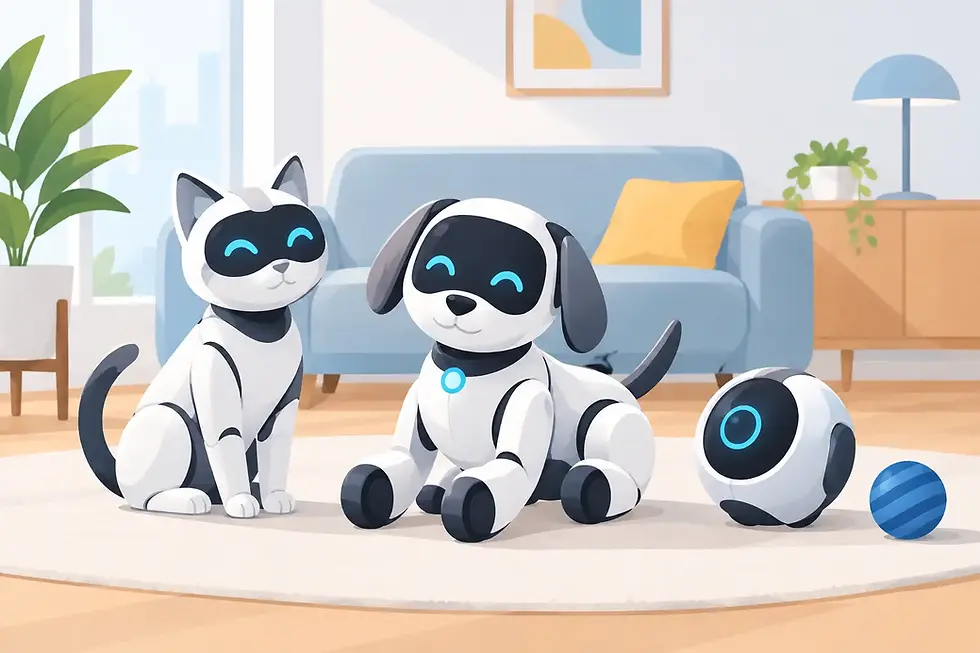
A therapy robot does not need a humanoid face, a huge app ecosystem, or an endless library of commands. In fact, too much complexity can be a liability. Care settings benefit from intuitive interactions: pick it up, pet it, speak to it, and receive a clear response.
This is where product design becomes as important as AI. The weight needs to feel manageable. Fur or exterior materials should tolerate regular cleaning. Controls must be understandable to staff members and visitors, not only to a tech enthusiast. Battery charging cannot turn into another daily headache. A companion robot succeeds when people reach for it naturally.
Where Robotic Pets Can Make Sense
Elder care and memory care are the most visible use cases, but the category reaches further. Robotic pet therapy may support a child coping with a stressful medical visit, an adult living alone, a person in rehabilitation, or a classroom exploring empathy and human-machine interaction.
The fit depends on the environment and the individual. A realistic cat may spark joy for one person and discomfort for another who misses a beloved pet. A robotic dog may appeal to someone who always wanted an animal but could never manage the responsibility. Some people prefer a less realistic companion because it feels playful rather than emotionally loaded.
For organizations, the biggest value is often consistency. A live therapy animal can be extraordinary, but it needs a handler, breaks, training, health monitoring, and careful scheduling. A robotic pet can be available at 7 a.m., 3 p.m., or during a difficult night shift. That does not make it better than a live animal. It makes it a different tool with different operating rules.
The Trade-Offs Behind the Warm Fuzzies
The futuristic appeal should not erase the hard questions. Any organization considering robotic pets should establish clear expectations for staff, residents, and families. These machines are companions, not clinicians. They can complement a care plan, but they should never be marketed as a cure for loneliness, depression, dementia, or anxiety.
Privacy also deserves attention. Some advanced companion robots include microphones, cameras, cloud connectivity, or apps. Those features can create richer interactions, but they also raise questions about data collection and consent. In a private home, the owner can decide what feels acceptable. In a senior community, hospital, or school, the bar should be higher. Ask what data is captured, where it is stored, who can access it, and whether key functions work without an internet connection.
Durability and hygiene are equally practical. A plush companion designed for a child’s bedroom is not automatically suited to shared use across a care facility. Buyers should consider cleanable surfaces, removable coverings where available, battery safety, replacement policies, and a routine for checking damage.
Then there is the human factor. Staff adoption determines whether a robotic pet becomes a beloved part of the day or sits unused in a cabinet. The best rollout is usually small: introduce a few devices, identify interested users, observe reactions, and let caregivers share what works. A robot should add moments of connection, not create another task on an overloaded shift.
How to Evaluate a Robotic Companion
Before choosing a model, start with the desired outcome. Is the priority calming tactile interaction, conversation prompts, entertainment, education, or a more capable AI companion experience? A lifelike therapy cat and a voice-driven desktop robot may both be called companion robots, but they solve very different problems.
Look closely at interaction quality. Does it respond predictably to touch? Are its sounds soothing rather than repetitive or startling? Can someone with limited dexterity hold it comfortably? Does it need a phone app every time it is used? Product videos can show the wow factor, but real value appears in the tenth, fiftieth, and hundredth interaction.
Consider the setting next. A home user may want character, customization, and smart features. A care organization may place more value on low maintenance, easy sanitation, multiple-device management, and a clear support channel. Price matters, but the cheapest option can become expensive if it breaks quickly or requires constant intervention.
For tech scouts and early adopters, this category is also worth watching because it is a preview of a much bigger shift. Emotional robotics is moving beyond gimmicks. As sensors improve, embodied AI becomes more conversational, and product makers learn how to design trust, robotic companions will become more expressive and more specialized. Some will be pets. Others will be desk buddies, learning partners, mobility assistants, or social robots with entirely new forms.
The Future Is Not About Replacing Pets
The most compelling vision for robotic pet therapy is not a world where machines replace animals or people. It is a world with more options for comfort, especially when the traditional options are unavailable. A robotic cat cannot wag its tail because it loves you. But it can invite a person to reach out, smile, remember, speak, and feel less alone for a while.
That is not a minor achievement. It is one of the most human things a smart machine can be designed to do.
For anyone tracking the future of smart machines, watch the moments after the demo ends. The robot that earns a second touch, a name, or a story is the one that may truly belong in people’s lives.

Comments