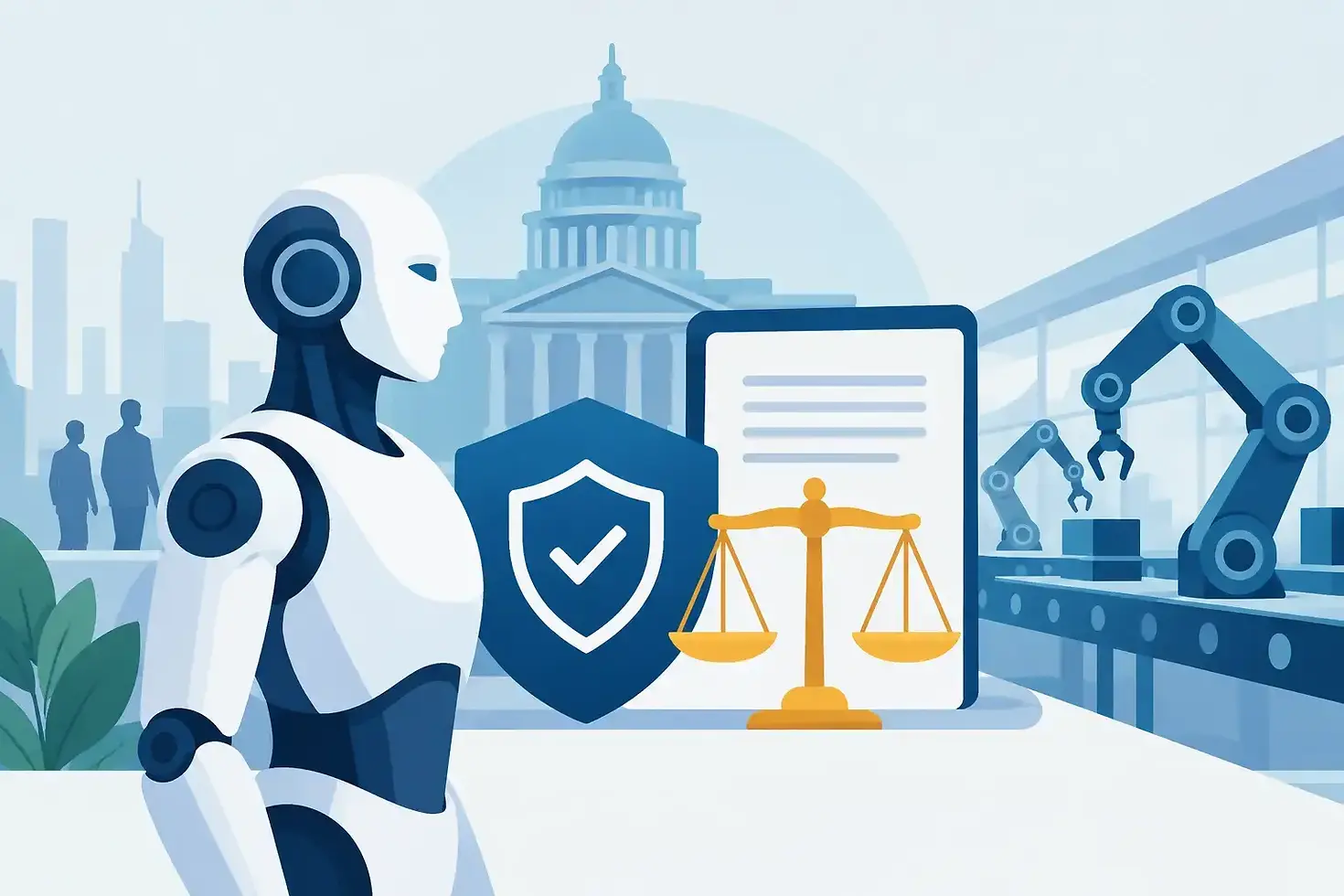
Robotics Regulations Are Shaping the Robot Era

A humanoid carrying boxes, a robot dog patrolling a construction site, and an AI companion listening in a living room may look like scenes from different futures. They are all arriving at once. That is why robotics regulations have moved from a niche policy conversation into a real-world force that will shape what robots can do, where they can go, and how quickly people welcome them.
For builders and buyers, regulation is not the enemy of the robot era. It is the operating system around it. Smart rules can turn impressive demos into trusted products, give companies a clearer route to market, and help the public separate genuinely useful machines from hype with wheels.
Why Robotics Regulations Matter Now
Robots are leaving the lab. They are entering warehouses, hospitals, campuses, hotels, retail floors, homes, and sidewalks. A machine that stays behind a factory safety fence is one thing. A mobile robot that works near children, pets, customers, vehicles, and private data is something else entirely.
The central challenge is simple: robots are not one category. A compact robotic vacuum, a 150-pound quadruped, a warehouse arm, and a general-purpose humanoid create radically different risks. Their rules cannot be identical. A rule that makes sense for an industrial robot might be excessive for an AI pet, while a consumer-device approach may be nowhere near enough for a powerful autonomous machine moving through a public space.
This is why the future will not be governed by one giant "robot law." Instead, robotics will be shaped by a stack of existing and emerging rules covering product safety, workplace safety, privacy, cybersecurity, accessibility, transportation, consumer protection, and liability. Federal agencies, state governments, cities, standards bodies, insurers, courts, and international markets will all influence the final experience.
That may sound messy. It is. But it also reflects the reality of the machines themselves. Robots touch the physical world, and physical-world technology always has consequences.
The Rules That Will Define Everyday Robots
Safety comes first when robots share space with people
The biggest regulatory question is not whether a robot looks futuristic. It is whether it behaves predictably when life gets unpredictable.
For industrial robots, safety frameworks have long focused on guarding, emergency stops, speed limits, risk assessments, and controlled work cells. Collaborative robots changed that equation by working closer to people. Humanoids and mobile robots raise it again because they can walk, reach, carry objects, open doors, and operate in spaces designed for humans.
Expect safety expectations to focus on force limits, stable movement, obstacle detection, emergency shutdowns, remote intervention, and clear boundaries on what a robot can do without human oversight. A robot that can lift a bin may need different controls than one that merely delivers a drink. The details depend on the task, the environment, the machine's size and speed, and who may be nearby.
For buyers, this creates an important distinction: a spectacular demo is not the same as deployment readiness. Watch for how a robot recovers from a stumble, responds to a person stepping into its path, and handles unexpected objects. Those moments reveal more than a perfectly staged dance video ever will.
Privacy becomes physical with cameras, microphones, and sensors
Many advanced robots see and hear the world to function. A home companion may use cameras to recognize faces. A delivery robot may map sidewalks. A humanoid may need visual perception to navigate a workplace. Those capabilities are exciting, but they also make the robot a moving data collection device.
In the United States, privacy rules are fragmented. There is no single nationwide consumer privacy law covering every use case, while states continue to set their own standards. Rules involving biometric information, children's data, health information, recordings, and location data can be especially sensitive.
The best robot experiences will make data practices obvious rather than burying them in a legal page. Buyers should be able to tell when sensors are active, what information stays on the device, what travels to the cloud, who can access it, and how long it is retained. Physical controls matter too. A visible camera shutter, microphone mute button, status light, and easy deletion settings build trust faster than vague promises.
Cybersecurity is no longer optional
A connected robot is a computer with motors. If it is compromised, the risk is not just a stolen password. It could mean a disrupted facility, exposed video feeds, a disabled safety system, or unauthorized control of a machine in someone’s home or workplace.
Regulators are increasingly focused on connected-device security, and buyers are becoming sharper about it. Secure software updates, account protection, encrypted communications, vulnerability reporting, and a clear support lifecycle are becoming core product expectations. A company selling a robot should be ready to answer a basic question: how long will this machine receive security updates?
This matters especially in a fast-moving market. A cheap robot with no patch plan can become an expensive liability. The exciting purchase is not always the durable purchase.
Sidewalks, Roads, and Public Spaces Are a Different Arena
A robot inside a private warehouse operates under one set of conditions. A robot moving through a city meets another level of scrutiny.
Sidewalk delivery robots, security patrol machines, and autonomous mobility devices often face local restrictions on speed, weight, right-of-way, permitted areas, and remote supervision. Cities must think about wheelchair access, pedestrian safety, crowding, curb cuts, and what happens when a robot stops in the wrong place. A machine that feels like a convenience to one person can feel like an obstacle to another.
Humanoids will face their own public-space questions. Can they enter retail stores? Can they work as greeters? Can they carry goods across a campus? Can they use elevators or public transit? The answer will often depend on local rules, property owner policies, insurance requirements, and the robot’s actual behavior.
This is where thoughtful regulation can accelerate adoption. Clear pilot programs and defined operating zones give companies a place to prove value without asking the public to absorb unlimited risk. Cities that create workable pathways could become powerful launchpads for the next generation of service robots.
Workplaces Will Test the Real Value of Humanoids
The global race to build capable humanoids is one of the most electrifying stories in robotics. But the first major deployments will not be decided by charisma alone. They will be decided by safety cases, reliability, training, integration, and economics.
In American workplaces, employers have obligations to protect workers. Introducing mobile manipulators or humanoids means studying pinch points, collision risks, battery charging, loading limits, operator training, maintenance procedures, and emergency response. Labor questions will also matter. Workers need clarity on how robots change jobs, who supervises them, and when humans remain responsible for the final decision.
The most successful early deployments may be less dramatic than the headlines suggest. Instead of a humanoid doing every task in a facility, it may start with repetitive material handling, simple inspection rounds, or moving supplies between defined locations. That is not a disappointment. It is how useful technology earns its place.
What Buyers and Builders Should Watch
The regulatory landscape is still moving, so no one can offer a single universal checklist. Still, a few signals separate companies preparing for the real world from companies selling a concept.
Look for transparent safety documentation, clear human override options, realistic operating limits, defined privacy controls, regular software support, and honest demonstrations of failure recovery. Ask whether the robot is intended for home, commercial, industrial, or public use. Those environments are not interchangeable, and a responsible manufacturer will not pretend they are.
For startups, the opportunity is enormous. Regulation can feel slower than innovation, but engaging early can be a competitive advantage. Build with audit trails, permissions, testing, and safety constraints from the beginning. Retrofitting trust after a public incident is far more expensive.
For enthusiasts, regulations are part of the story worth following. They reveal where robots are graduating from novelty into infrastructure. When a city creates a sidewalk robot policy, a workplace approves a humanoid pilot, or a manufacturer publishes serious safety and security commitments, the future of smart machines gets more tangible.
The Robot Future Needs Permission to Grow
There will be bad rules. Some will be too broad, too slow, or based on yesterday’s technology. There will also be companies that overpromise, rush testing, or treat public trust as an afterthought. Both can slow momentum.
But the answer is not a world with no guardrails. The machines we want in our homes, businesses, and neighborhoods must earn access to those spaces. The winners will be the robots that are not only astonishing to watch, but also safe to operate, clear about their data, secure over time, and genuinely useful on an ordinary Tuesday.
That is the next frontier to watch: not just which robot can move like a person, but which one can responsibly become part of human life.


Comments