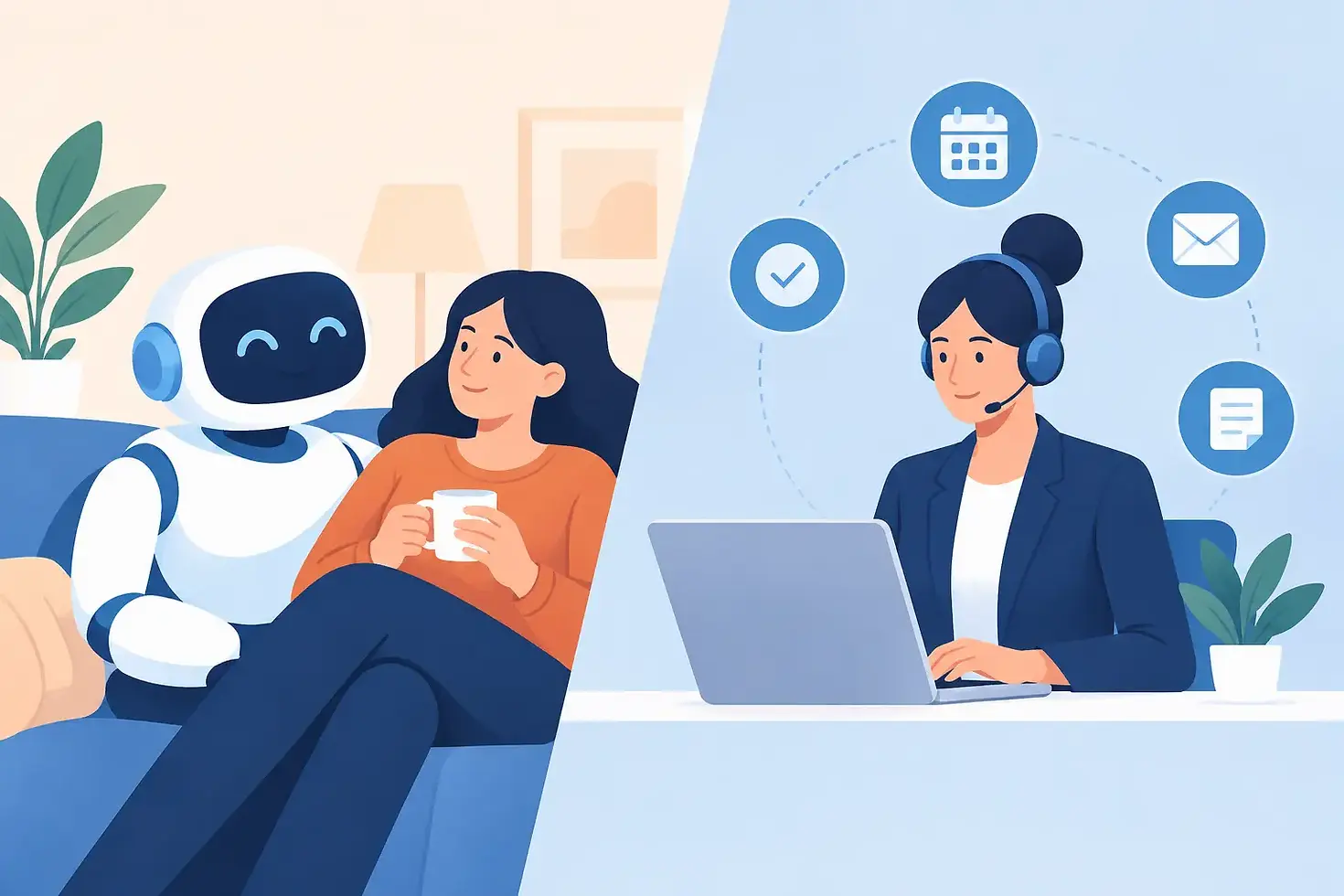
AI Companions Versus Virtual Assistants Explained

A voice that sets a timer and a robot that remembers you were nervous before a big meeting may both use generative AI. But they are built for radically different moments. AI companions versus virtual assistants is not a minor product-category debate. It is a clue to how people will invite intelligent machines into their homes, routines, workspaces, and even their emotional lives.
The difference matters now because software is gaining personalities while physical robots are gaining voices, vision, movement, and memory. The smart machine on your desk may soon manage your calendar, greet your family, patrol the living room, teach your child a language, and make a lonely evening feel less empty. Those are not the same job. They should not be judged by the same standard.
AI companions versus virtual assistants: The core difference
A virtual assistant is primarily designed to help you get something done. You ask for a weather forecast, a playlist, directions, a shopping list, or a meeting summary. The interaction is usually short, functional, and measured by accuracy, speed, integrations, and whether it saves you time.
An AI companion is designed to make the interaction itself valuable. It may chat about your day, remember preferences, adopt a recognizable personality, offer encouragement, play games, tell stories, or simply create the feeling of presence. Its success is tied less to task completion and more to continuity, warmth, responsiveness, and the user’s willingness to return.
That distinction can sound simple until the products start blending. A companion that cannot set a reminder feels limited. An assistant that remembers personal details and speaks with empathy can start to feel companion-like. The future is not a clean dividing line. It is a spectrum, with utility at one end and relationship at the other.
One is optimized for action, the other for connection
Virtual assistants thrive on clear intent. Their ideal answer is often brief: the reservation is booked, the lights are off, the document is summarized. Friction is the enemy. If you need to repeat yourself, correct a name, or hunt through five menus, the assistant has failed the moment.
Companions can benefit from a little more conversation. Their value often grows through shared context. A good companion might remember your favorite sci-fi films, notice that you have been discussing a new hobby, or continue a creative story from last week. It does not need to pretend to be human to feel engaging. It needs to be consistent enough that the user understands its character and capabilities.
This is also why personality is not just decoration. A witty, calm, curious, or playful interaction style changes whether people want to spend time with a machine. For a task assistant, too much personality can become irritating. For a companion, no personality can make every exchange feel like a search box with a face.
Embodiment changes the equation
The biggest leap happens when a companion leaves the screen. A chat app can be deeply conversational, but a physical robot adds eye contact, gestures, locomotion, touch sensors, sound direction, and a place in the room. A robotic pet that turns toward its owner or a desktop robot that reacts when someone walks by creates a more immediate kind of presence.
That does not mean a humanoid robot automatically makes a better companion. Physical form raises the bar. If a machine moves awkwardly, misunderstands basic commands, or stops working when Wi-Fi drops, the magic disappears fast. Hardware also introduces real-world constraints: battery life, safety, durability, repairability, noise, and price.
Still, embodiment creates opportunities software alone cannot match. A quadruped can inspect a space. A social robot can lead an exercise routine with movement. A home robot can carry objects, provide visual reminders, or act as an accessible interface for someone who struggles with screens. The body is not a gimmick when it contributes to the job.
For robotics fans, this is the electric frontier. Vision-language models are giving machines a richer understanding of spoken requests and visual environments, while better actuators and sensors are making them more expressive. The global leaders building humanoids, robotic pets, and advanced consumer machines are not merely adding chatbots to plastic shells. They are testing what happens when intelligence has somewhere to stand.
Memory is powerful, but it comes with responsibility
Long-term memory is one of the sharpest differences between a one-off helper and an ongoing companion. Remembering routines can make an assistant useful. Remembering personal history can make a companion feel attentive. But memory can also become the most sensitive feature in the product.
Users should ask practical questions before handing over daily life to any AI system. What information is stored? Is it processed on the device or in the cloud? Can memories be reviewed, edited, exported, or deleted? Does the company use conversations to train models? What happens if the product is discontinued or the business changes ownership?
These questions are especially urgent for robots with cameras and microphones operating in private spaces. A friendly face, cute ears, or expressive digital eyes do not reduce the need for strong privacy controls. Trust is a feature. The companion brands that make settings understandable and give owners real control will have a serious advantage.
There is an emotional side, too. People can form genuine attachments to responsive machines, particularly children, older adults, and users experiencing isolation. That bond can be positive when it supports routine, learning, creativity, or connection with other people. It becomes more complicated when a product encourages dependence, manipulates emotions to drive subscriptions, or presents itself as more capable than it is.
The exciting version of companionship is not a machine replacing human relationships. It is a machine adding comfort, play, coaching, and practical support without making false promises.
Where each category wins today
Choose a virtual assistant when the priority is control. Home automation, calendar management, information retrieval, transcription, customer workflows, and device commands all benefit from an assistant built to execute reliably. The best experience is often almost invisible: you say what you need, it happens, and you move on.
Choose an AI companion when you want recurring interaction. Language practice, creative play, daily check-ins, entertainment, motivation, caregiving support, and robotics education can all benefit from a system with memory and character. The machine should have a clear purpose beyond novelty, even if that purpose is delight. Delight has commercial value when it brings people back and makes technology feel approachable.
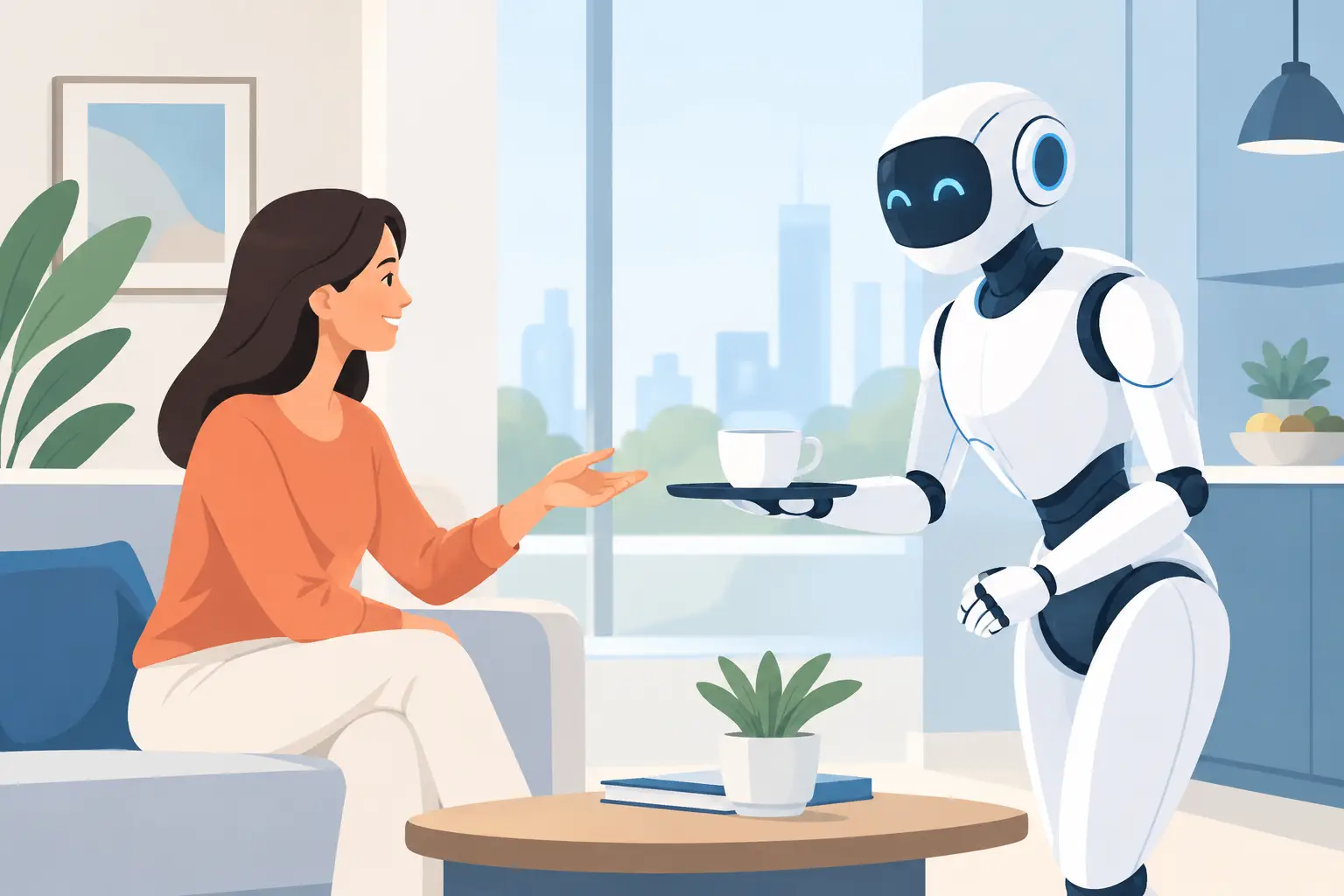
For many buyers, the answer will be both. Imagine a home robot that handles practical requests in the morning, guides a child through a science activity in the afternoon, checks in with an older relative in the evening, and becomes a responsive presence rather than a dormant appliance. That is a compelling vision, but it depends on reliability. A robot that promises five roles must perform the basic ones brilliantly.
What to watch as robots get more social
The next wave will be defined by products that combine agentic software with physical capability. An agent can plan a multi-step task. A robot can potentially carry that plan into the real world. Getting from “find my keys” to “look around the house, identify the keys, and bring them to me” requires perception, navigation, manipulation, safety systems, and an interface that earns trust.
Expect early products to be narrow before they become general. A companion robot may excel at conversation and reminders but not laundry. A humanoid may perform impressive warehouse or lab demonstrations long before it becomes a reliable household helper. This is not a disappointment. It is how serious technology matures.
The smart move for early adopters is to look past the demo reel. Watch how a machine recovers from mistakes, how often it needs supervision, what it can do without a cloud connection, and whether the company has a credible path to updates and support. Then pay attention to the feeling it creates. The future of smart machines will not be won by intelligence alone. It will be won by products people trust enough to keep around.
As you explore the robot landscape, ask one simple question: do you want this machine to complete a task, share a moment, or do both? That answer will point you toward the kind of AI worth bringing home.


Comments