Future Consumer Robots Are Ready to Meet You

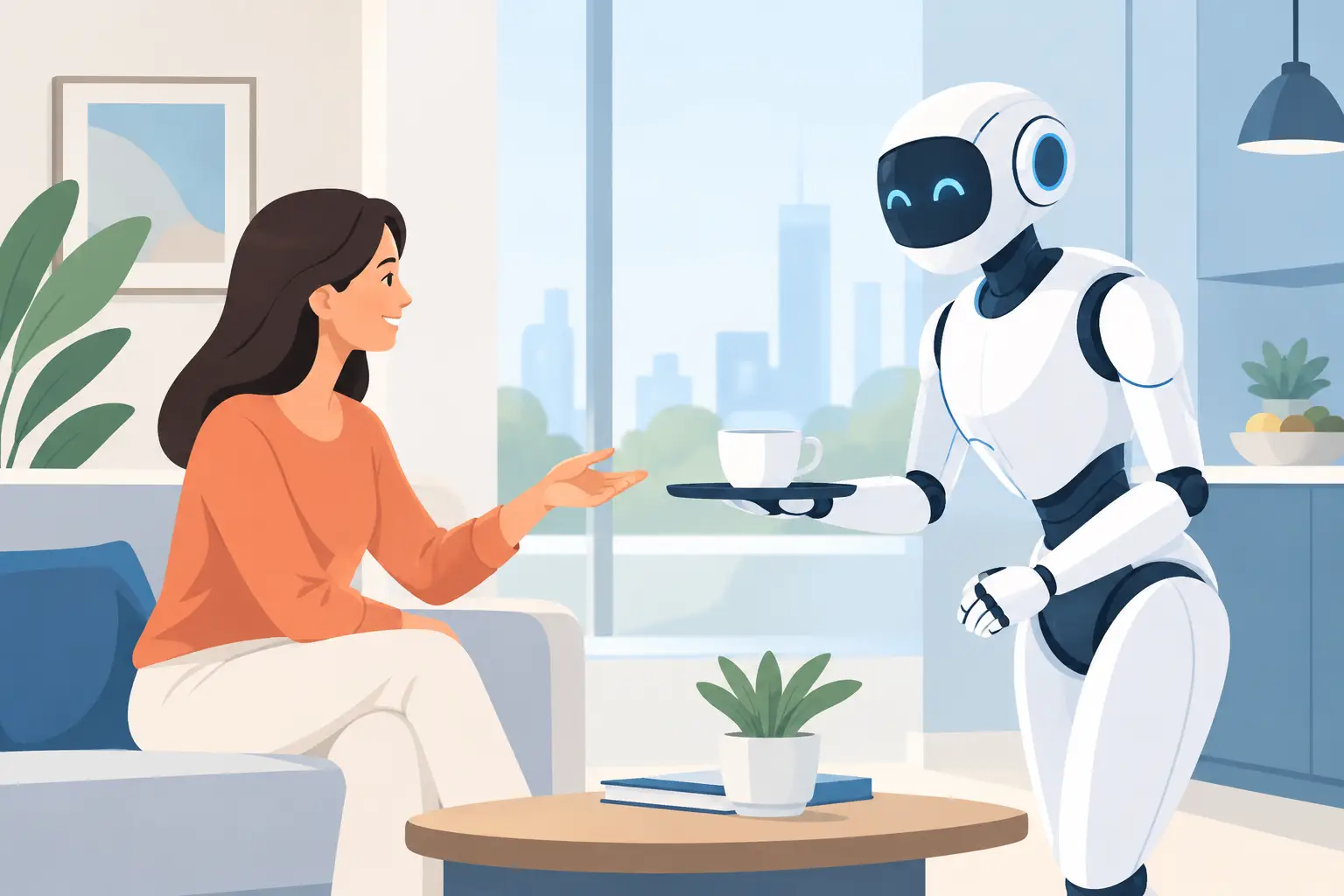
A robot that can walk across a trade-show floor is impressive. A robot that can find your charger, carry a laundry basket without crushing it, understand a half-finished sentence, and know when to stay out of the way is something else entirely. That is the threshold future consumer robots are approaching: not just machines built to wow a crowd, but useful products designed to live around people.
The exciting part is that this is no longer a single-category story. Humanoids, robotic dogs, AI companions, mobile home assistants, and smart cleaning machines are all evolving at once. Some will become daily tools. Some will be premium lifestyle technology. Some will be lovable, strange, and impossible to put in a neat product box. Together, they are changing what consumers expect from a machine.
Future Consumer Robots Will Be Chosen for a Job
The first wave of consumer robotics taught the market a tough lesson: novelty gets attention, but repeatable value earns a place in the home. A robot does not need to do everything. It needs to do a few things reliably enough that people miss it when it is gone.
That is why the next generation will likely be more specialized before it becomes truly general. A robotic pet may offer companionship, routine, and responsive behavior without pretending to replace a real animal. A quadruped may patrol a large property, inspect spaces, or capture cinematic footage where a wheeled device cannot go. A home robot may begin with simple fetch-and-carry tasks, telepresence, or basic organization before it handles a chaotic kitchen.
Humanoid robots are the biggest headline act because our homes, tools, and workplaces were designed for human bodies. A machine with hands, arms, legs, and a human-scale reach could eventually open doors, load a dishwasher, move supplies, and work in spaces without an expensive redesign. That is the long-term promise behind platforms from Tesla, Figure, and other ambitious builders.
But a humanoid body also creates a very high bar. Walking is only part of the challenge. The robot must see clutter, judge object weight, understand context, operate safely near children and pets, and recover calmly when the real world refuses to cooperate. The most compelling demo is not a perfectly staged one. It is a robot handling the messy, ordinary unpredictability of life.
The AI Layer Changes the Experience
The hardware gets the spotlight, but the intelligence layer will decide whether a robot feels like a product or a presence. Voice models, computer vision, memory, and planning systems are giving robots a more natural way to interact with people. Instead of selecting commands from a rigid menu, users will increasingly say what they want in plain language.
Imagine asking a household robot to prepare the living room for guests. That request contains a surprising amount of judgment. Which items belong elsewhere? What is fragile? What does “prepare” mean in this particular home? The robot will need to ask useful follow-up questions, remember preferences, and know when not to act.
This is where AI companions may move fastest. They do not need to lift a heavy box or navigate a staircase to be valuable. They can converse, coach, entertain, remind, observe routines, and create a feeling of responsiveness. The trade-off is equally clear: the more personal the interaction, the more consumers will care about data collection, privacy settings, and who controls the relationship.
A great consumer robot will not feel like a surveillance device with cute eyes. It will make its permissions understandable. It will show people what it sees or stores. It will offer real controls, not fine print. Trust is not a side feature in this category. It is part of the product.
The First Winners May Not Look Like Sci-Fi
There is a temptation to measure progress only by the arrival of a general-purpose humanoid that does every household task. That future is worth watching, but it may not be the first mass-market win.
The near-term champions could be machines with a clear identity and a focused role: a robotic companion for older adults, a security rover for a large home, a robot pet that responds with convincing personality, or a mobile camera platform for creators and families. These products can deliver a memorable experience with fewer physical risks and less operational complexity than a full humanoid helper.
Price will shape this market just as much as intelligence. Early adopters may spend premium-electronics money for a remarkable robot, especially if it creates content, supports a business, or makes a home feel genuinely futuristic. Most buyers, however, will compare a robot against the cost of appliances, subscriptions, and human help. The product has to justify not only its purchase price but also maintenance, repairs, updates, and possibly a monthly AI service fee.
That does not mean every future consumer robot must be cheap. It means the value has to be visible. A $300 robot pet and a $30,000 humanoid face completely different buyer questions. One must earn emotional attachment. The other must earn practical trust and measurable time savings.
What Makes a Robot Ready for Real Life?
The polished video is only the beginning. When evaluating a consumer-facing robot, look past the choreography and ask what happens on an average Tuesday.
First, consider autonomy. Can the robot complete a task without constant correction, or does it depend on an operator, a controlled room, or a carefully prepared route? Remote assistance can be a useful bridge in early products, but brands should be clear about when a human is involved.
Next, examine safety and recovery. Robots will drop things, lose track of objects, and occasionally make bad decisions. The question is whether they stop safely, explain the issue, and allow a person to take over without drama. A machine that handles failure gracefully is far more exciting than one that looks perfect until it encounters a sock.
Then there is serviceability. Consumer robots have motors, sensors, batteries, joints, and exterior materials that will wear over time. Can the battery be replaced? Is support available where the buyer lives? Are software updates included? A futuristic machine still needs a realistic ownership plan.
Finally, pay attention to personality. This matters most for companions and robotic pets, but it applies to every category. A robot’s voice, movement speed, sounds, eye contact, and sense of timing shape whether it feels comforting, useful, irritating, or uncanny. Designers are not merely building behavior. They are building a relationship.
The Robot Home Will Be Built in Stages
The future will not arrive when one robot suddenly does everything. It will arrive in stages, through products that earn their next capability. A smart vacuum taught consumers that a machine could independently move through the home. Robotic mowers and pool cleaners expanded that idea outdoors. Companion robots are teaching people to accept more expressive, social behavior from devices.
The next step is a richer kind of physical assistance. Expect robots that map spaces better, understand household routines, move between rooms with more confidence, and connect to the devices already in the home. A home full of smart locks, cameras, lights, and appliances gives a mobile robot more ways to be useful. But it also raises the stakes for security and interoperability.
Not every household needs a humanoid. A city apartment may get more value from a compact companion, a clever mobile assistant, or a robot built around one exceptional task. A large home, workshop, farm, or content studio may be the place where quadrupeds and advanced humanoids prove their worth first. The right form factor depends on the environment, the budget, and what the owner wants the robot to do.
That variety is exactly what makes this moment electric. We are moving beyond the question, “When will robots arrive?” They are already here in prototypes, early releases, research labs, and increasingly polished products. The better question is which machines deserve a place in your life.
For anyone following the category, watch the demos, ask hard questions, and pay attention to the details that happen after the applause. The robot worth waiting for will not just look like the future. It will give you a reason to use it tomorrow.


Comments