
Home Robot Versus Smart Speaker: Which Fits?

A smart speaker can answer a question from across the room. A home robot can roll over, look at you, carry the conversation forward, and potentially do something physical. That is the real tension in the home robot versus smart speaker decision: are you adding a voice interface, or inviting a new kind of machine into your daily life?
For years, the smart speaker was the front door to the connected home. It set timers, played music, controlled lights, and made voice assistants feel normal. But the next wave is far more animated. AI companions, robotic pets, wheeled assistants, and emerging humanoids are turning passive voice control into something with movement, personality, and presence.
Home Robot Versus Smart Speaker: The Core Difference
A smart speaker is a stationary command center. Its superpower is speed. Say a wake word, ask for a weather report, start a playlist, or turn off the kitchen lights. It is inexpensive, familiar, and usually connected to a mature ecosystem of smart-home devices.
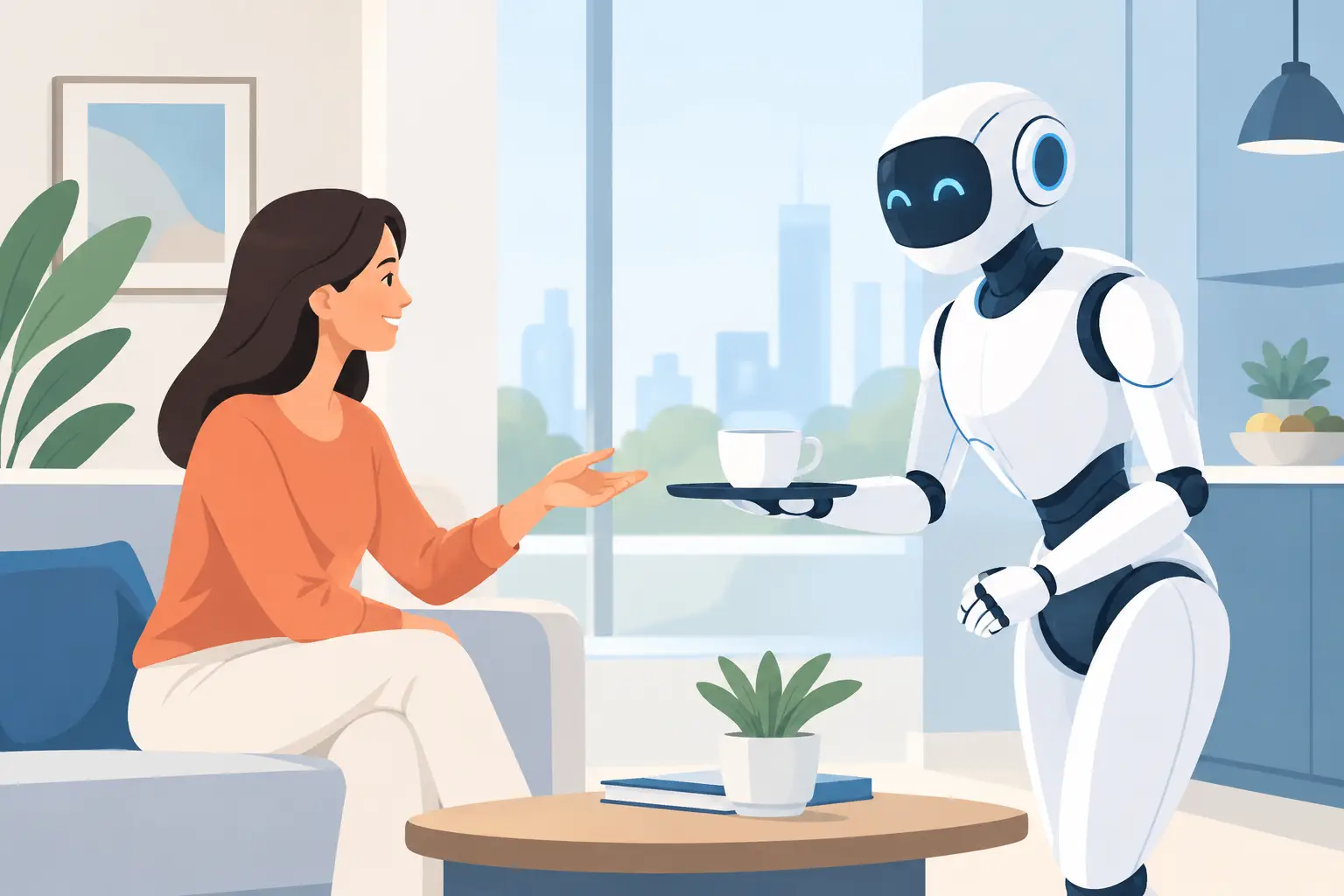
A home robot is a physical computing platform. It may still listen, speak, stream music, and control your devices, but its appeal is bigger than those basics. It can navigate rooms, use cameras and sensors to understand its surroundings, react to people, and in some cases perform simple tasks. The best ones do not just respond to a command. They create an interaction.
That physicality changes the equation. A speaker can tell you that your dog is barking through a connected camera. A mobile robot might patrol a room, send a live view, or become a playful part of the household. A smart speaker can remind a child that it is time to brush their teeth. A companion robot can make the reminder feel like a ritual rather than another notification.
Neither category wins every household. They solve different problems, and the right choice depends on whether you value utility, novelty, companionship, automation, or a combination of all four.
What Smart Speakers Still Do Better
Smart speakers have a massive advantage in simplicity. Setup is quick, the price is approachable, and the core experience is well understood. If your goal is to control lights, thermostats, plugs, doorbells, and music with your voice, a smart speaker remains hard to beat.
They also tend to work best as invisible technology. There is no navigation path to clear, no charging dock to think about, and no concern about a rolling device being underfoot. Put one in the kitchen, bedroom, or office and it becomes part of the room without demanding attention.
For a household building its first smart-home system, that matters. A speaker is the lower-risk entry point. It is a practical remote control for connected living, especially when multiple family members need to use it without learning a new interface.
But invisibility is also the limitation. Smart speakers are designed to disappear into the background. They rarely surprise you. They do not explore, emote, follow, or create a memorable moment when a guest walks through the door.
Why Home Robots Feel Like a Bigger Leap
Home robots are not trying to be better speakers with wheels. At their most compelling, they make digital intelligence visible. Their screens, voices, movements, sensors, and personalities turn AI into something you can actually share a space with.
That is why robotic pets and AI companions have created so much excitement. Their value is not measured only in tasks completed. It is measured in engagement. A robot that recognizes familiar faces, reacts to touch, follows you into another room, or makes an unexpected comment has a different emotional impact than a cylinder on a shelf.
Mobility expands practical possibilities, too. A wheeled home robot can act as a telepresence device for remote family members, a mobile camera for checking on a pet, or a moving entertainment companion. Future consumer humanoids could eventually handle more physical chores, though buyers should be realistic about where the technology is today. Many impressive robots are still early products, premium devices, demos, or platforms built for enthusiasts and developers rather than turnkey household labor.
That does not make them less exciting. It makes the purchase decision more interesting. You are not just buying a feature. You are getting early access to the future of smart machines.
Presence is the feature speakers cannot copy
A robot does not need hands to feel more alive than a smart speaker. Motion alone can add intention. When a robot turns toward the person speaking, travels across a room, or reacts with an expressive display, it creates a sense of presence.
For creators, educators, and robotics fans, this is a major reason to choose a robot. It can become a conversation piece, a teaching tool, a character in videos, or a tangible way to explore AI. A smart speaker is useful. A robot can be useful and fascinating.
That said, presence can also be a downside. Some people do not want a camera-equipped device moving through their home. Others may find a robot distracting, especially in a small apartment or a busy family environment. The magic only works when everyone sharing the space is comfortable with it.
Price, Privacy, and the Reality Check
The biggest trade-off is cost. Smart speakers are widely available at entry-level prices. Home robots range from accessible robotic pets to expensive, advanced machines with a much higher commitment. The price difference is not only about hardware. It reflects motors, sensors, batteries, mobility systems, AI software, and the complex engineering required to make a machine behave safely around people.
Privacy deserves equal attention. Both categories may use microphones, cloud services, and connected accounts. A home robot can add cameras, mapping data, and movement history to that equation. Before bringing one home, understand what data it collects, whether video is stored locally or in the cloud, how voice recordings are handled, and what controls exist for turning sensors off.
Battery life is another practical divider. A speaker stays powered in one spot. A robot has to manage charging, navigation, and downtime. If a device is supposed to patrol, entertain, or assist, ask what happens when it needs to recharge. A robot that spends most of the day on its dock may still be fun, but it is not a replacement for reliable smart-home infrastructure.
Support matters, too. Robotics is moving fast, and some young companies will evolve their products rapidly while others may change direction. Look for a clear software update policy, replacement parts, customer support, and a realistic picture of the robot's current capabilities. A polished demo is exciting. Daily ownership is the real test.
Which One Should You Bring Home?
Choose a smart speaker if you want dependable voice control, easy music playback, a lower price, and an uncomplicated way to manage smart-home devices. It is the logical choice for utility-first buyers who want technology to fade into the background.
Choose a home robot if you want to experience embodied AI, explore a new product category, create a more interactive home environment, or bring a machine with personality into your space. It is especially compelling for early adopters, families interested in STEM, creators, and anyone who sees robotics as more than another gadget category.
There is also a strong case for owning both. The speaker can remain the always-ready control hub, while the robot becomes the mobile, expressive layer of the home. Think of the speaker as infrastructure and the robot as the experience. One handles the routine. The other makes the routine feel like a glimpse of what is coming next.
The Smart Home Is Starting to Move
The most exciting shift is not that robots will replace smart speakers overnight. It is that the home interface is becoming more physical, visual, and personal. Voice was only the first chapter. The next generation of machines may see the room, understand context, move toward the action, and build familiar patterns with the people around them.
At We Are The Robots, that is the category worth watching closely: not distant science fiction, but real machines with personalities, capabilities, and clear limits that are improving in public. Start with the problem you want solved, then choose the machine that makes you genuinely excited to use it again tomorrow.


Comments