
Tesla Optimus Robot: What Makes It Different?
- Or Alkalay
- Jun 5
- 6 min read

The tesla optimus robot is not just another flashy humanoid making the rounds on social media. It sits at the center of a much bigger idea - that robotics could follow the same curve Tesla pushed in electric vehicles, where a bold prototype turns into a platform, then into a product category people actually expect to see in daily life.
That is why Optimus gets so much attention. It is not only about whether the robot can walk, wave, or sort objects on stage. It is about whether Tesla can turn humanoid robotics from a research spectacle into a scalable machine business. For anyone tracking the future of smart machines, that question is electric.
Why the Tesla Optimus robot matters
A lot of humanoid robots look impressive in carefully edited demos. Fewer feel connected to a serious manufacturing engine, a global brand, and a company already obsessed with autonomy, power systems, and AI at scale. That is where Tesla stands apart.
The tesla optimus robot matters because it is backed by a company that already builds batteries, electric drivetrains, custom chips, embedded software, and high-volume production lines. Most robotics companies would love to control even a fraction of that stack. Tesla already does. If Optimus works, it will not be because the robot is cute or cinematic. It will be because Tesla may be able to integrate hardware, software, energy systems, and manufacturing better than almost anyone.
That does not mean Tesla automatically wins. Humanoid robots are brutally hard. Walking is hard. Grasping is hard. Reliable autonomy in messy environments is hard. Building one prototype is one challenge. Building thousands that operate safely around people is a different beast entirely. But the ambition is real, and that is exactly why the industry is watching.
What Optimus is designed to do
Tesla has framed Optimus as a general-purpose humanoid robot built to handle repetitive, undesirable, or physically demanding tasks. That vision sounds massive because it is. The dream is not a single-purpose machine bolted into a fixed station. The dream is a flexible worker that can move through human environments and use tools, hands, and spaces already designed for people.
In practical terms, that means tasks like carrying items, sorting parts, moving bins, assisting in warehouses, and supporting factory workflows are the most believable early targets. These are structured or semi-structured environments where the robot can generate value before it is expected to become a do-everything household helper.
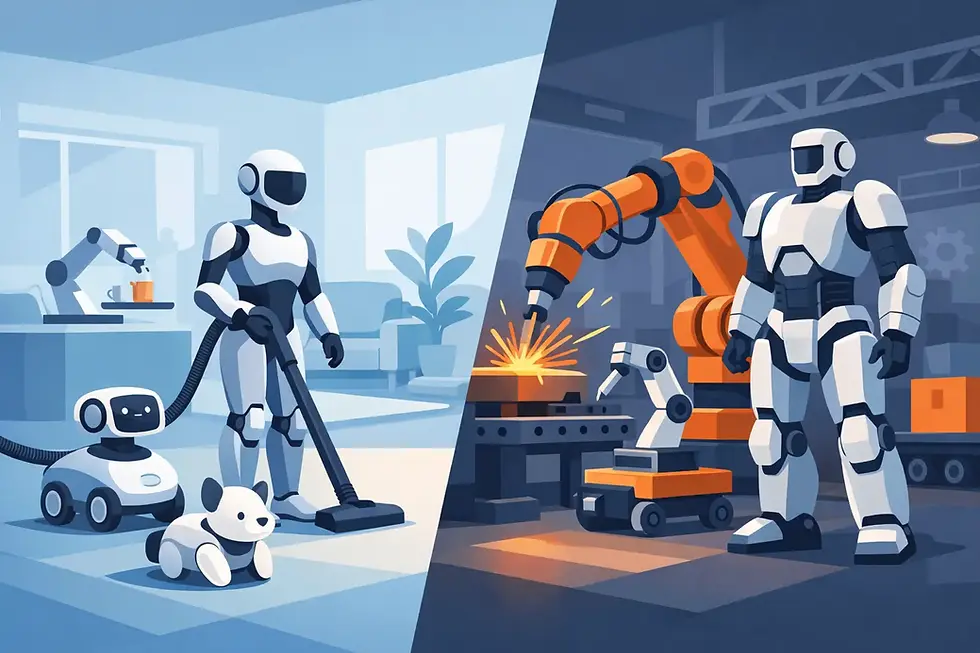
That distinction matters. The gap between factory support and full home autonomy is huge. A robot that succeeds in a controlled industrial setting is not automatically ready to cook dinner, fold laundry, and help an aging parent. The consumer fantasy is powerful, but the near-term commercial path is more likely to run through enterprise deployments first.
The real Tesla advantage
The biggest reason people take Optimus seriously is not the human shape by itself. It is Tesla’s broader technology machine.
First, there is AI. Tesla has spent years building computer vision systems, training models on real-world data, and pushing toward autonomy. A humanoid robot needs perception, planning, and action in dynamic spaces. Those are not identical to self-driving problems, but there is obvious overlap in neural networks, edge computing, sensor fusion, and real-time decision-making.
Second, there is actuation and power. Humanoid robots live or die on movement efficiency, battery life, joint control, and weight balance. Tesla knows batteries. It knows motors. It knows how painful energy constraints can be in mobile systems. That gives it a head start in one of the hardest parts of robotics.
Third, there is manufacturing. This may be the biggest piece of all. Robotics is full of brilliant demos that never become widely available products. Tesla has at least the potential to think beyond the lab and ask the question that changes everything: can this be made at scale, with consistency, serviceability, and cost reduction over time?
Where the tesla optimus robot still faces hard limits
The hype is loud, but the constraints are louder if you know where to look.
Humanoid robots are mechanically complex. Every degree of freedom adds more control challenges, more wear points, and more opportunities for failure. Human environments are full of edge cases too. Slippery floors, unpredictable objects, tight spaces, poor lighting, and people moving around without warning can break a robot’s confidence fast.
Dexterity is another major wall. Picking up a box is one thing. Handling soft, reflective, irregular, fragile, or partially hidden objects is another. Human hands make manipulation look easy because we have millions of years of biology behind us. Robotic hands still have to earn that level of trust.
Then there is economics. Even if Tesla creates a capable humanoid, the value equation has to make sense. Businesses will ask how much labor it offsets, how reliable it is, how often it needs maintenance, and how safely it works around teams. Consumers will ask an even tougher question: what exactly does it do for me every day that justifies the price?
This is where realism matters. The future of humanoids is exciting, but not every use case arrives at once. Some tasks will be commercially viable early. Others will remain expensive showcases for years.
Optimus versus other humanoid robots
Tesla is not alone, and that is good news for the entire market. Figure, Boston Dynamics, Unitree, and several other robotics players are all pushing the category forward in different ways. Some are stronger in motion, some in manipulation, some in enterprise integration, and some in affordability.
What makes Optimus especially compelling is that Tesla brings mainstream visibility to humanoids at a level most robotics brands cannot match. When Tesla shows progress, millions of people notice. That attention accelerates public interest, investor attention, supplier momentum, and competitive pressure across the sector.
Still, attention does not equal dominance. Other companies may move faster in specific deployments or prove more reliable in real-world operations. In robotics, execution beats branding very quickly. The winner will not be the company with the loudest stage moment. It will be the one that delivers useful performance over time.
Could the Tesla Optimus robot become a home robot?
This is the question almost everyone wants answered first, and it is also the one most likely to be oversimplified.
Yes, the humanoid format makes home use easier to imagine. A robot shaped for human spaces can theoretically open doors, carry groceries, use household layouts, and interact with furniture and tools built for human bodies. That is a major advantage over machines designed only for factories or labs.
But homes are chaotic. They are full of pets, children, clutter, stairs, variable lighting, emotional interactions, and endless one-off tasks. A useful home robot has to be more than mobile. It has to be adaptable, safe, and genuinely helpful without needing constant babysitting.
So the better answer is: maybe, eventually. If Optimus becomes a home robot, it will likely arrive through gradual capability stacking, not a sudden leap into full domestic autonomy. Early value may come from simple assistance, monitoring, carrying, basic fetching, or routine household support. The all-purpose robot butler remains a bigger promise than a present-day product.
What to watch next
The most meaningful signs of progress will not be cinematic reveals. They will be boring in the best possible way.
Watch for repeated task performance, better hand control, smoother walking, longer operating time, and signs that Tesla is testing Optimus in actual work settings. Watch for whether it can complete useful jobs with less supervision. Watch for consistency. In robotics, consistency is where the future stops being theater and starts becoming a market.
It is also worth watching how Tesla talks about deployment. If the conversation shifts from vision statements to operating hours, unit economics, maintenance, and workflow integration, that is when things get serious. Spectacle gets headlines. Metrics build industries.
For the broader robot landscape, Optimus matters even if Tesla takes longer than expected. It pushes humanoids into mainstream conversation and raises the ceiling for what buyers, builders, and investors think is possible. That alone has value.
At We Are The Robots, that is the part we find most exciting: not the promise of one machine doing everything, but the growing sense that advanced humanoids are moving out of theory and into product reality. The tesla optimus robot may not solve the whole puzzle tomorrow, but it is one of the clearest signals that the age of visible, commercially relevant humanoids is no longer far off. Keep your eyes on the demos, but pay even closer attention to the work.


Comments