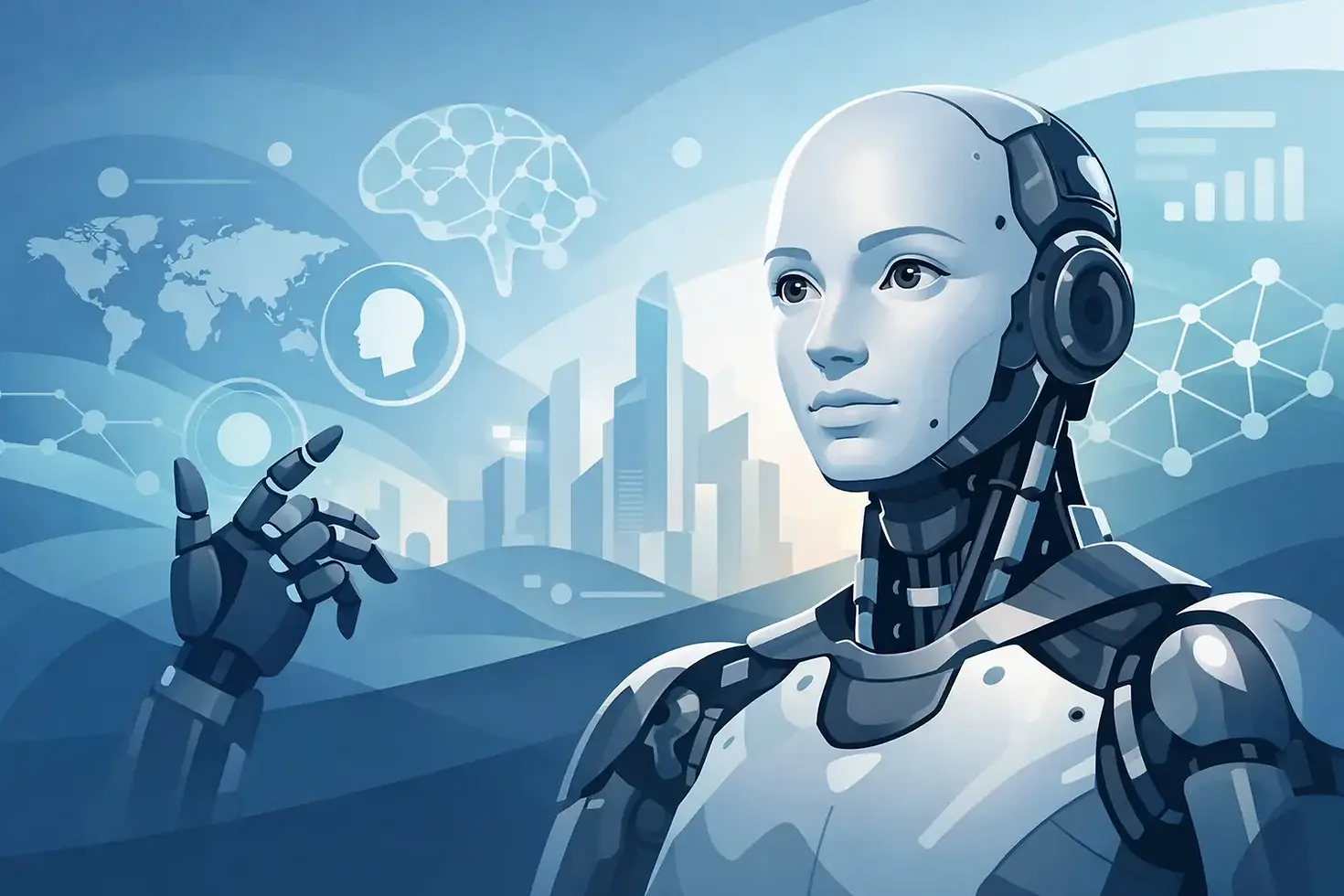
Ameca Humanoid Robot: Why It Stands Out

You do not need five minutes with the ameca humanoid robot to understand why it keeps dominating robot conversations. One glance at its face, one subtle eyebrow raise, one perfectly timed look of curiosity, and the usual gap between machine and personality suddenly feels a lot smaller. In a market packed with impressive hardware, Ameca wins attention fast because it does something many robots still struggle to do - it feels present.
That is the real story here. Ameca is not just another humanoid built to check the boxes of arms, head movement, and AI demos. It has become a reference point for what expressive robotics can look like when design, mechanics, and performance all aim at the same target: human engagement. If you care about the future of smart machines, this is one of the robots worth watching closely.
What makes the Ameca humanoid robot different
A lot of humanoids impress people with strength, speed, or autonomous movement. Ameca takes a different route. Its standout feature is expression. The face is engineered to communicate in a way that feels unusually natural, with detailed motion around the eyes, mouth, and brows that gives conversations more emotional texture than most robots can currently deliver.
That matters more than it may seem. Humans read faces instantly. We respond to tiny signals before a single sentence is fully processed. When a robot can mirror those cues with believable timing, it changes the quality of the interaction. Suddenly the machine is not just demonstrating technology - it is participating in a social exchange.
This is where Engineered Arts, the company behind Ameca, made a smart call. Instead of trying to position the robot as a warehouse worker, factory unit, or household labor machine first, they pushed hard into communication, presentation, and expressive realism. That has made Ameca incredibly effective on stage, on camera, and in public demos where attention is everything.
Why Ameca keeps going viral
Ameca was built for the exact moment robotics entered mainstream social media. It photographs well, performs well, and creates instant curiosity. Its head turns are smooth. Its reactions are theatrical without feeling cartoonish. The robot can appear surprised, interested, skeptical, or amused in ways that make people stop scrolling.
That is not a small advantage. In robotics, visibility drives momentum. A machine that people want to watch has a much better chance of shaping public imagination than one that is technically brilliant but visually flat. Ameca has become one of the most recognizable humanoids in the world because it delivers that rare combination of technical sophistication and pure audience magnetism.
There is another reason it lands so well. Ameca sits right on the edge of comfort and uncanny realism. It looks human enough to trigger emotional interest, but still robotic enough that most viewers remain fascinated rather than unsettled. That balance is hard to get right, and Ameca gets remarkably close.
The design language is futuristic, not deceptive
One of the smartest things about Ameca is that it does not pretend to be fully human. Its face and upper body are designed to evoke human presence, but the materials and visible robotic structure keep the identity clear. This matters because hyper-real androids can sometimes create discomfort fast. Ameca avoids much of that by staying honest about what it is.
That transparency gives it broader appeal. It feels advanced without slipping into imitation. For a public-facing humanoid, that is a powerful design choice. It invites interaction instead of forcing people to evaluate whether the robot is trying too hard to pass as human.
For brands, events, museums, research centers, and media productions, this makes Ameca especially attractive. It is futuristic, instantly recognizable, and conversation-starting without crossing too far into synthetic-human territory.
Where the ameca humanoid robot fits in the market
Ameca is not the robot you compare directly with every humanoid making headlines. If you line it up next to machines built for logistics, industrial mobility, or household task automation, you are looking at different priorities. Some humanoids are trying to carry boxes, climb stairs, or operate in labor environments. Ameca is focused much more on interaction, expression, and public engagement.
That does not make it less important. In some ways, it makes it more strategically interesting. The robotics industry does not only need machines that can work. It also needs machines that can communicate the future to humans in a way humans actually respond to. Ameca is one of the clearest examples of that role being executed at a high level.
This gives it value across entertainment, education, exhibitions, hospitality concepts, branded experiences, and AI research demonstrations. If you want a humanoid that makes people feel like the future has arrived in the room, Ameca delivers that effect better than most.
What Ameca does well - and where the limits are
The excitement around Ameca is real, but so are the trade-offs. This is not a general-purpose home robot ready to cook dinner, fold laundry, and reorganize your office. It is also not the leading symbol of humanoid heavy labor. Its magic is concentrated in communication and presence, not broad physical utility.
That distinction matters because robotics hype often collapses every category into one giant expectation machine. People see a humanoid face and immediately imagine a full-service domestic assistant. We are not there yet, and Ameca should be viewed for what it actually excels at.
What it does well is create rich, memorable interaction. It can serve as a public-facing robotic personality, a research platform, a demonstration machine, and a showcase for the current state of human-robot expression. If your benchmark is emotional realism and audience impact, it performs far above average.
If your benchmark is autonomous household productivity, the answer is more complicated. It depends on what problem you want the robot to solve. For social engagement, Ameca is compelling. For general physical assistance, the category still has major ground to cover.
Why expression may matter as much as mobility
There is a tendency to treat expressive robotics like a sideshow compared with locomotion and manipulation. That misses the bigger picture. Robots that live around humans will need social intelligence, or at least the appearance of social fluency, to be accepted at scale. A robot can have excellent mechanics, but if it interacts awkwardly, people may not want it near them for long.
Ameca points toward a future where interface is embodied. Instead of tapping a screen, you speak with a machine that responds through face, posture, and timing. That can make AI feel more intuitive, more legible, and sometimes more trustworthy - assuming the design is used responsibly.
This is where Ameca becomes more than a viral robot. It becomes a signal. The future of humanoids will not be decided by movement alone. It will also be decided by whether robots can participate in human environments without feeling cold, confusing, or socially disruptive.
Ameca as a showcase robot
For anyone tracking the global robot ecosystem, Ameca has become one of the best showcase machines in the space. It demonstrates what happens when robotics is built not only for engineering benchmarks, but for public imagination. That is why it appears so often in demos, exhibitions, and media coverage. It translates advanced robotics into something instantly legible.
This makes it especially relevant for creators, educators, startup founders, and tech-forward businesses looking for a concrete example of where humanoid interaction is headed. You do not need to own an Ameca to learn from it. Watching how people respond to it already tells you something important about the market.
At We Are The Robots, this is exactly the kind of machine that deserves attention. Not because it solves every robotics challenge, but because it captures a major one: how to make advanced machines feel engaging, desirable, and real to the people who will eventually live and work alongside them.
What comes next for Ameca and robots like it
The next phase is not simply making Ameca more expressive. It is connecting expression to stronger conversational AI, better contextual awareness, more fluid body language, and eventually more useful physical capability. That is where the category gets even more interesting.
Imagine a humanoid that can greet visitors, answer nuanced questions, read the room, adapt its tone, and perform light physical tasks without losing that signature sense of presence. That is the direction many people want from social humanoids. Whether Ameca itself becomes that full package or remains a leading expression platform, it has already shaped expectations.
And that is the bigger point. Ameca does not need to be the everything robot to matter. It only needs to prove that humans are ready to respond to machines that feel socially alive. It has already done that. The next wave of humanoids will be judged, in part, by whether they can create the same spark.


Comments